
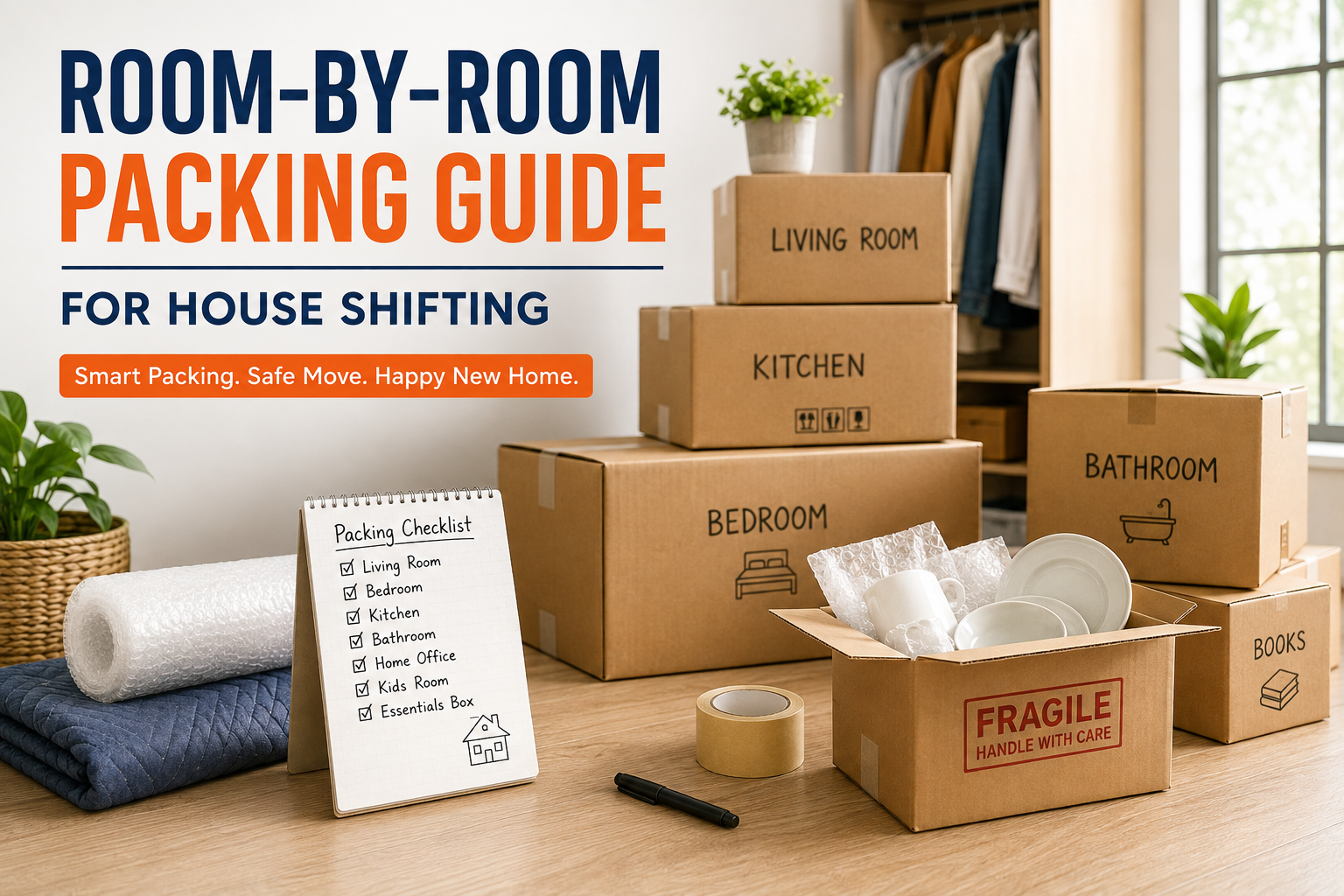
Room-by-Room Packing Guide for House Shifting
Packing an entire house can feel overwhelming, especially when everything needs to be organized, protected, and easy to unpack later. The best way to make moving stress-free is to pack one room at a time. This method helps you stay organized, reduces confusion, and makes unpacking much easier in your new home.
In this guide, we’ll walk you through the best packing practices for every room in your house.
Why Pack Room by Room?
Packing room by room offers several benefits:
- Keeps items organized
- Prevents mixing belongings from different rooms
- Makes unpacking faster
- Reduces the risk of losing small items
- Helps movers place boxes in the correct rooms
Pro Tip: Label every box with both the room name and a brief description of its contents.
1. Living Room Packing Guide
The living room usually contains a mix of furniture, electronics, décor, and fragile items.
Pack First
- Wall décor
- Books
- Decorative pieces
- Photo frames
- Curtains
Pack Last
- TV
- Remote controls
- Daily-use electronics
Tips
- Wrap photo frames with bubble wrap.
- Pack books in small boxes to avoid excessive weight.
- Remove TV cables and label them.
- Use original TV boxes whenever possible.
2. Bedroom Packing Guide
Bedrooms contain clothing, bedding, personal belongings, and furniture.
Clothing
- Fold seasonal clothes.
- Use wardrobe boxes for hanging clothes.
- Vacuum bags save space for blankets and winter wear.
Furniture
- Remove bed frames if possible.
- Keep screws in labeled zip-lock bags.
- Tape hardware bags to the furniture.
Essentials
Prepare an overnight bag containing:
- Clothes
- Medicines
- Chargers
- Toiletries
- Important documents
3. Kitchen Packing Guide
The kitchen requires extra care because many items are fragile.
Glassware
- Wrap each glass individually.
- Use dish dividers.
- Fill empty spaces with packing paper.
Plates
- Pack vertically instead of stacking flat.
- Cushion each plate with paper.
Appliances
- Clean and dry appliances completely.
- Remove detachable parts.
- Secure cords with twist ties.
Pantry
- Finish opened food items before moving.
- Seal spices and liquids tightly.
- Avoid transporting expired products.
4. Bathroom Packing Guide
Bathrooms are relatively quick to pack.
Pack
- Towels
- Toiletries
- Hair dryers
- First aid supplies
Tips
- Seal shampoo and liquid bottles with plastic wrap.
- Place toiletries inside leak-proof bags.
- Discard expired medicines and cosmetics.
5. Dining Room Packing Guide
Dining rooms often contain delicate furniture and glassware.
Pack Carefully
- Dining table
- Chairs
- Glass cabinets
- Decorative bowls
- Crockery
Tips
- Remove glass shelves before moving.
- Wrap table corners with foam protectors.
- Use furniture blankets for wooden tables.
6. Home Office Packing Guide
A home office contains valuable equipment and important documents.
Electronics
- Backup important files.
- Remove batteries where possible.
- Pack monitors in padded boxes.
Documents
Keep important documents separately:
- Passport
- Property papers
- Insurance documents
- Financial records
Cables
Label every cable before disconnecting.
7. Kids’ Room Packing Guide
Moving can be stressful for children, so involve them in packing.
Pack Together
- Toys
- Books
- School supplies
- Clothing
Tips
- Let children decorate their moving boxes.
- Keep favorite toys easily accessible.
- Pack one “comfort box” with familiar items.
8. Garage & Storage Room Packing Guide
Garages usually contain heavy and oddly shaped items.
Sort Items
- Tools
- Gardening equipment
- Sports gear
- Seasonal decorations
Tips
- Drain fuel from machines.
- Wrap sharp tools carefully.
- Pack heavy tools in small boxes.
Label Every Box Properly
A simple labeling system saves hours during unpacking.
Example:
Kitchen – Plates & Bowls – Fragile
Bedroom – Winter Clothes
Living Room – Books
Add FRAGILE stickers on delicate boxes.
Prepare an Essentials Box
This should travel with you instead of the moving truck.
Include:
- Phone chargers
- Medicines
- Water bottles
- Snacks
- Important documents
- Basic kitchen utensils
- Toilet paper
- Cleaning wipes
- Extra clothes
- Baby or pet supplies (if needed)
Common Packing Mistakes to Avoid
- Packing all rooms together
- Overloading large boxes
- Forgetting to label boxes
- Using weak or damaged boxes
- Leaving empty spaces inside boxes
- Packing wet items
- Waiting until the last minute
Room-by-Room Packing Checklist
| Room | Priority |
|---|---|
| Living Room | ★★★★☆ |
| Bedroom | ★★★★★ |
| Kitchen | ★★★★★ |
| Bathroom | ★★★☆☆ |
| Dining Room | ★★★★☆ |
| Home Office | ★★★★★ |
| Kids’ Room | ★★★★☆ |
| Garage | ★★★☆☆ |
Final Thoughts
A successful move starts with a smart packing strategy. By packing one room at a time, labeling boxes clearly, and protecting fragile belongings, you can reduce stress and make unpacking much more efficient.
Whether you’re moving to a new apartment or a larger home, a room-by-room approach keeps everything organized from start to finish. Plan ahead, gather quality packing materials, and take your time with each room for a smoother and safer house-shifting experience.
