
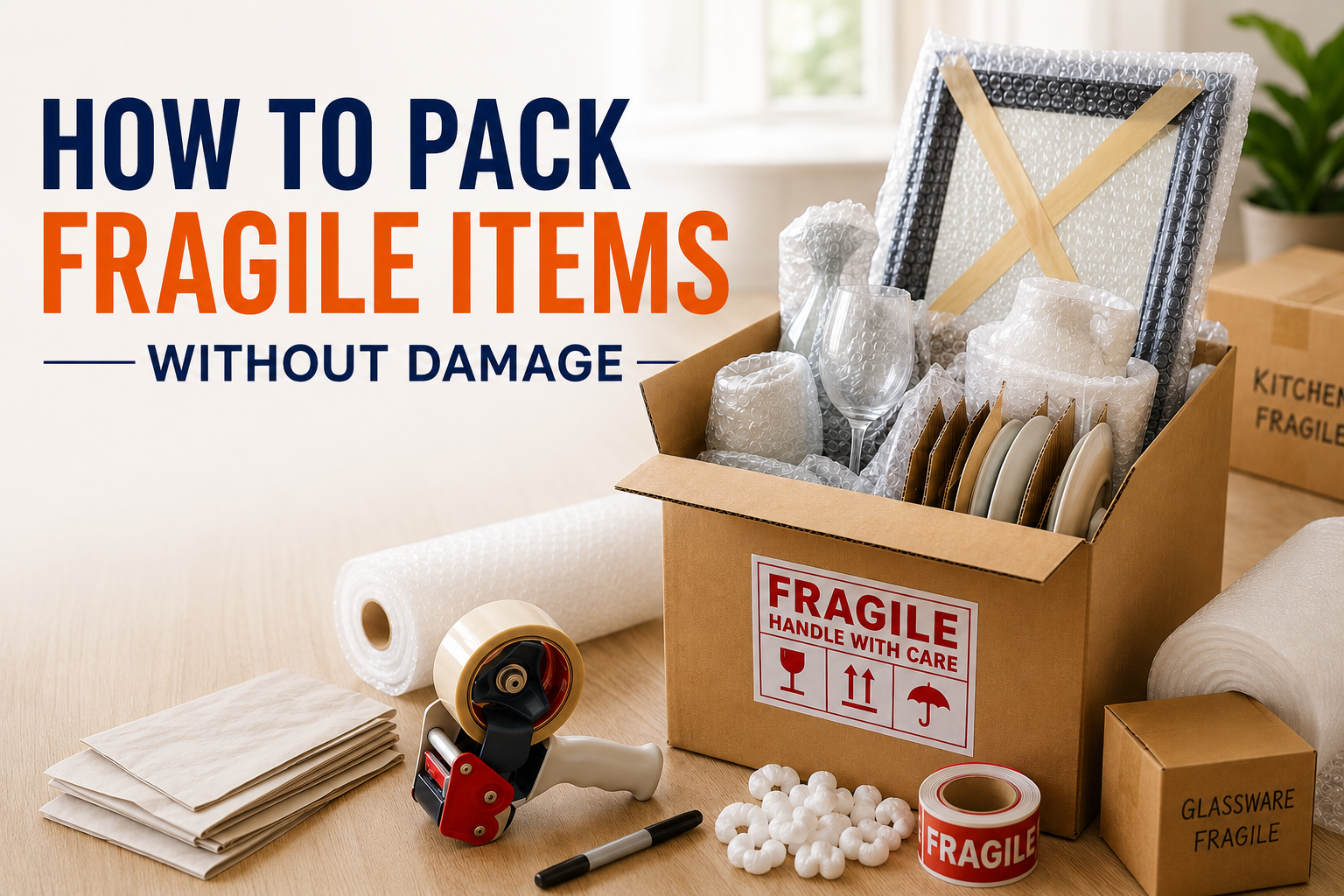
How to Pack Fragile Items Without Damage
Moving to a new home is exciting, but packing fragile belongings can be stressful. Glassware, dishes, mirrors, electronics, and decorative items are among the most commonly damaged possessions during relocation. The good news is that most damage can be prevented with proper packing techniques and the right materials.
In this guide, you’ll learn practical tips to pack fragile items safely so they reach your new home in perfect condition.
Why Fragile Items Get Damaged During Moving
Most fragile items break because they:
- Are packed without enough cushioning
- Have empty spaces inside the box
- Are placed in oversized cartons
- Are stacked incorrectly
- Are handled without proper labeling
Taking a little extra time while packing can save you from expensive replacements later.
Packing Materials You’ll Need
Before you start, gather these essential packing supplies:
- Bubble wrap
- Packing paper
- Foam sheets
- Packing peanuts
- Corrugated cardboard dividers
- Strong moving boxes
- Heavy-duty packing tape
- Stretch wrap
- Permanent marker
- “FRAGILE” stickers or labels
Using quality packing materials provides much better protection than newspaper or old cloth.
Step 1: Choose the Right Box Size
Avoid using oversized boxes for fragile belongings.
Instead:
- Use small or medium-sized boxes.
- Heavy fragile items should always go into smaller boxes.
- Ensure the box is strong and has a double-wall construction if possible.
A box that is too large allows items to move during transportation.
Step 2: Cushion the Bottom
Before placing anything inside:
- Add a layer of crumpled packing paper.
- Place bubble wrap or foam sheets at the bottom.
- Create at least 2–3 inches of cushioning.
This absorbs shocks during loading and unloading.
Step 3: Wrap Each Item Individually
Never pack delicate items without wrapping them separately.
Wrap every item using:
- Bubble wrap
- Foam sheets
- Packing paper
Secure the wrapping with tape without applying tape directly to delicate surfaces.
More layers are recommended for expensive or highly fragile items.
Step 4: Fill Empty Spaces
One of the biggest packing mistakes is leaving empty gaps.
Fill every space using:
- Packing paper
- Bubble wrap
- Foam peanuts
- Soft towels (for additional support)
Items should not shift when you gently shake the box.
Step 5: Pack Plates Vertically
Many people stack plates flat, but this increases the chance of cracking.
Instead:
- Wrap each plate individually.
- Place them vertically like records.
- Add cardboard dividers between every few plates.
This method distributes pressure more evenly.
Step 6: Protect Glasses and Cups Properly
For glasses:
- Stuff the inside with packing paper.
- Wrap handles separately.
- Wrap the entire glass in bubble wrap.
- Place glasses upright.
Never place glasses upside down.
Step 7: Secure Mirrors and Picture Frames
Mirrors require extra care.
To protect them:
- Apply painter’s tape in an “X” shape across the glass.
- Wrap with foam sheets.
- Cover with cardboard.
- Place inside a mirror box if available.
Always transport mirrors vertically.
Step 8: Pack Electronics Carefully
Whenever possible:
- Use the original manufacturer box.
- Remove batteries if necessary.
- Wrap cables separately.
- Protect screens with microfiber cloths before wrapping.
Label electronic boxes clearly.
Step 9: Seal and Label Every Box
After packing:
- Seal every opening with strong packing tape.
- Reinforce the bottom.
- Label all sides with:
- FRAGILE
- THIS SIDE UP
- Room name
Proper labeling helps movers handle boxes carefully.
Common Mistakes to Avoid
Avoid these common errors:
- Using weak cardboard boxes
- Overfilling boxes
- Mixing heavy and delicate items
- Leaving empty gaps
- Using old damaged boxes
- Skipping labels
- Wrapping multiple items together
These mistakes significantly increase the risk of damage.
Extra Tips for Maximum Protection
Here are a few additional expert tips:
- Keep box weight under 15–20 kg.
- Use double boxing for expensive collectibles.
- Don’t overload boxes with fragile items.
- Pack heavier items at the bottom.
- Store delicate boxes on top during transportation.
- Avoid using newspaper directly on delicate surfaces, as ink can stain.
Checklist Before Closing the Box
✔ Every item wrapped individually
✔ Bottom cushioning added
✔ Empty spaces filled
✔ Box sealed securely
✔ Fragile labels attached
✔ Correct room name written
✔ Box weight manageable
Final Thoughts
Packing fragile items doesn’t have to be difficult. With the right materials, careful wrapping, and smart packing techniques, you can greatly reduce the risk of damage during your move.
Whether you’re relocating across town or to another city, taking extra care with delicate belongings ensures they arrive safely and gives you one less thing to worry about on moving day.
